The Project
Environment, Mitigation and Benefits
The proposals for Lime Down Solar Park have been informed by environmental assessments and feedback received through consultation. Alongside measures to avoid, reduce and manage potential environmental impacts, the project also includes proposals to enhance biodiversity and deliver benefits for local communities.
Environmental Impact Assessment
Lime Down Solar Park is classified as an Environmental Impact Assessment (EIA) development. As part of the Development Consent Order (DCO) process, we carried out a comprehensive assessment of the potential significant environmental effects of the proposed development, in accordance with the Infrastructure Planning (Environmental Impact Assessment) Regulations 2017.
The EIA was an iterative process, with environmental assessments undertaken alongside the development and refinement of the project's design. This helped us identify the potential effects Lime Down Solar Park could have on the environment, both positive and negative, and develop measures to avoid or reduce adverse effects while seeking opportunities to enhance positive effects.
What did the EIA assess?
The EIA considered a wide range of environmental topics, including:
Ecology and biodiversity
Landscape and visual effects
Cultural heritage
Transport and access
Soils and agriculture
Hydrology, flood risk and drainage
Socio-economics, tourism and recreation
Noise and vibration
Climate change
Air quality
Health
Waste
For each topic, we assessed the potential effects of the project throughout its lifecycle, from construction through to operation and decommissioning.

How the EIA informed the proposals
The environmental assessment process involved site visits, environmental surveys, technical studies and consultation with relevant organisations and stakeholders. The findings helped inform the design of Lime Down Solar Park and identify measures to avoid, reduce or manage potential environmental effects.
The EIA was undertaken in stages as the proposals developed:
EIA Scoping (2024): We submitted an EIA Scoping Report to the Planning Inspectorate, setting out the proposed scope and approach to the assessments. The Planning Inspectorate consulted relevant organisations before issuing its Scoping Opinion, which helped inform the environmental topics and matters to be assessed.
Preliminary Environmental Information Report (2025): The PEIR presented the preliminary findings of our environmental assessments and the measures being considered to manage potential effects. It was made available during Stage Two statutory consultation to help local communities and stakeholders understand the potential impacts of the proposals and provide their feedback.
Environmental Statement (2025): The findings of the EIA were brought together in the Environmental Statement (ES), submitted as part of our DCO application in September 2025. The ES built on the preliminary assessments and considered the feedback received through consultation, the evolution of the design and the measures proposed to avoid, reduce or manage environmental effects.
Further environmental information and responses were also submitted during the Examination of the DCO application.
Further information
The Environmental Statement provides the full findings of the EIA, including the assessment of potential environmental effects and the measures proposed to manage them.
For more information, you can view the Environmental Statement and supporting documents on the Planning Inspectorate's Lime Down Solar Park documents page.
For a more accessible overview of the findings, you can read the Environmental Statement Non-Technical Summary, which explains the assessment and its findings without requiring specialist technical knowledge.
Managing environmental effects
Reducing or avoiding environmental impacts has been an important consideration in developing the proposals for Lime Down Solar Park.
The environmental assessments helped inform the location and layout of infrastructure, taking account of sensitive environmental features and surrounding communities. Where potential impacts were identified, measures were developed to avoid, reduce or manage these effects.
These include measures relating to landscaping, ecology, construction traffic, noise, drainage, soils and public rights of way.
The proposed measures are set out in the Environmental Statement and associated management plans submitted as part of the DCO application. These include controls that would apply during construction, operation and decommissioning, subject to development consent being granted.
Biodiversity Net Gain
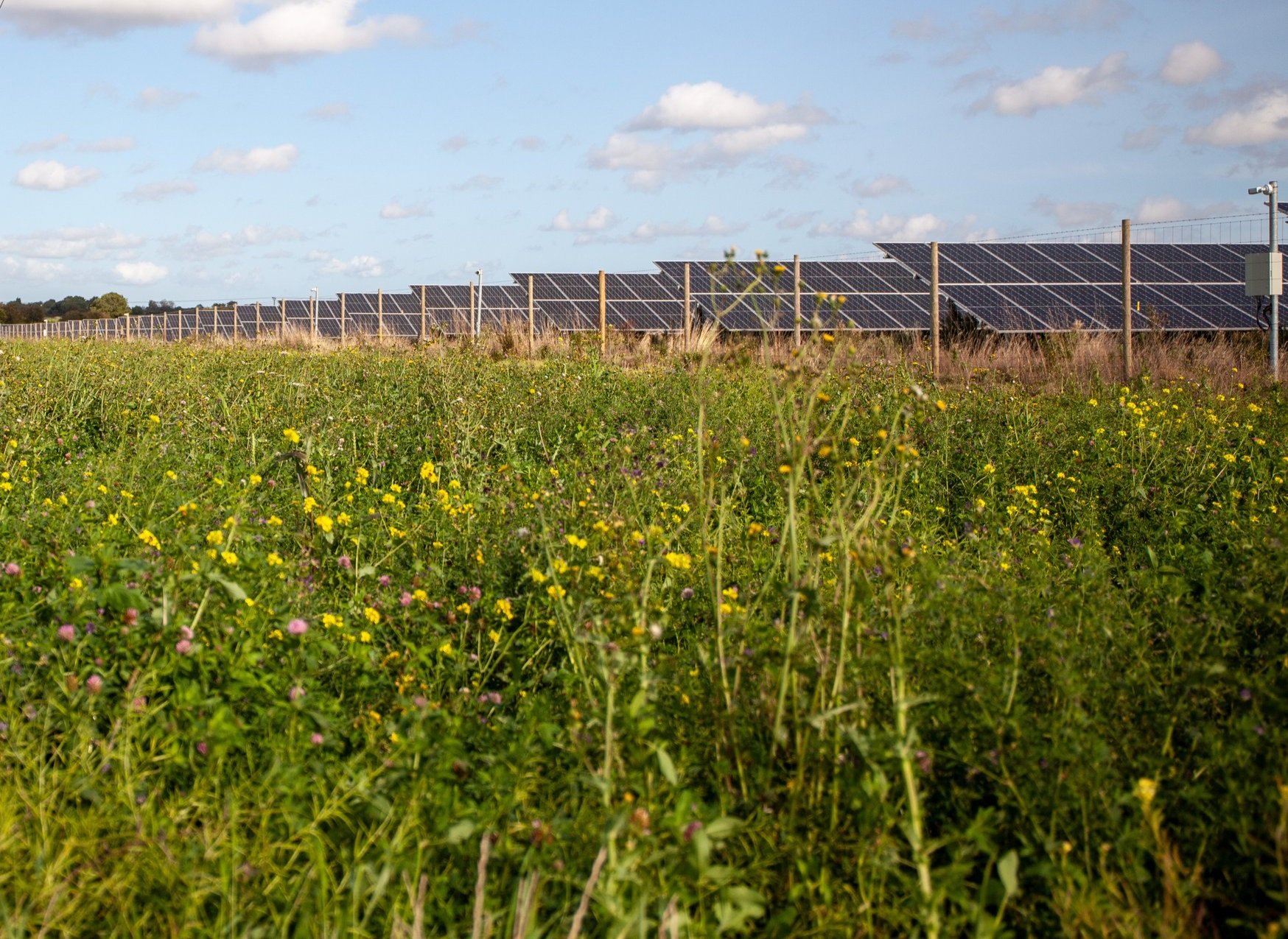
A well-managed solar farm can help protect and enhance wildlife habitats, providing opportunities to boost local biodiversity. As the panels are mounted on posts with minimal disturbance to the ground, much of the land beneath and around them remains available to support plants and wildlife.
Biodiversity net gain (BNG) is an approach to development that aims to leave wildlife habitats in a measurably better state than before development takes place.
Although the statutory requirement for NSIP applications to deliver a minimum 10 per cent BNG does not apply to Lime Down Solar Park, as the application was submitted before the requirement comes into effect, the project has sought to deliver more than 10 per cent BNG. The submitted environmental assessments indicate that the proposals would exceed this minimum.
The project includes a range of proposed measures to enhance local biodiversity, including:
Delivering substantial new hedgerow and tree planting;
Reinforcing planting at existing hedgerow and field boundaries;
Extensive grassland habitat creation;
Managing grassland habitats under solar PV panels by using a balance of grazing and cutting to maximise ecological benefits; and
Providing enhancement opportunities for habitats of local, regional or national significance.
For further information about the proposed biodiversity enhancements and how they have been assessed, please see the Biodiversity Net Gain Assessment Report, available through the Planning Inspectorate's Lime Down Solar Park documents page.
Supporting Local Communities
Island Green Power believes that communities living closest to its renewable energy projects should benefit from them, and that local people are best placed to identify the initiatives that would be most valuable to their communities.
During our Stage One and Stage Two consultations, we invited local communities to share their suggestions for community benefits. We received a range of ideas, including support for local community facilities, environmental improvements, educational initiatives and improvements to walking and cycling routes.
We would like to thank everyone who took the time to share their views and suggestions.
Benefits within the project
The proposals include a range of measures that could provide environmental and recreational benefits to the surrounding area. These include the protection and enhancement of existing ecological features, new planting and habitat creation, biodiversity net gain and proposed improvements to access through permissive paths.
The project could also provide opportunities for local employment, skills development and involvement of local businesses during construction and operation.
Community Benefit Fund
In addition to the measures included within the project itself, Island Green Power has committed to providing a Community Benefit Fund should development consent be granted.
The fund would support initiatives beyond the immediate project site, providing opportunities for local communities to identify projects and activities that would deliver lasting benefits.
Potential initiatives could include support for local charities, community groups, educational programmes and improvements to existing community facilities.
The priorities and arrangements for the fund would be developed through further engagement with Wiltshire Council, local parish councils and community organisations, taking account of the suggestions received through consultation.